
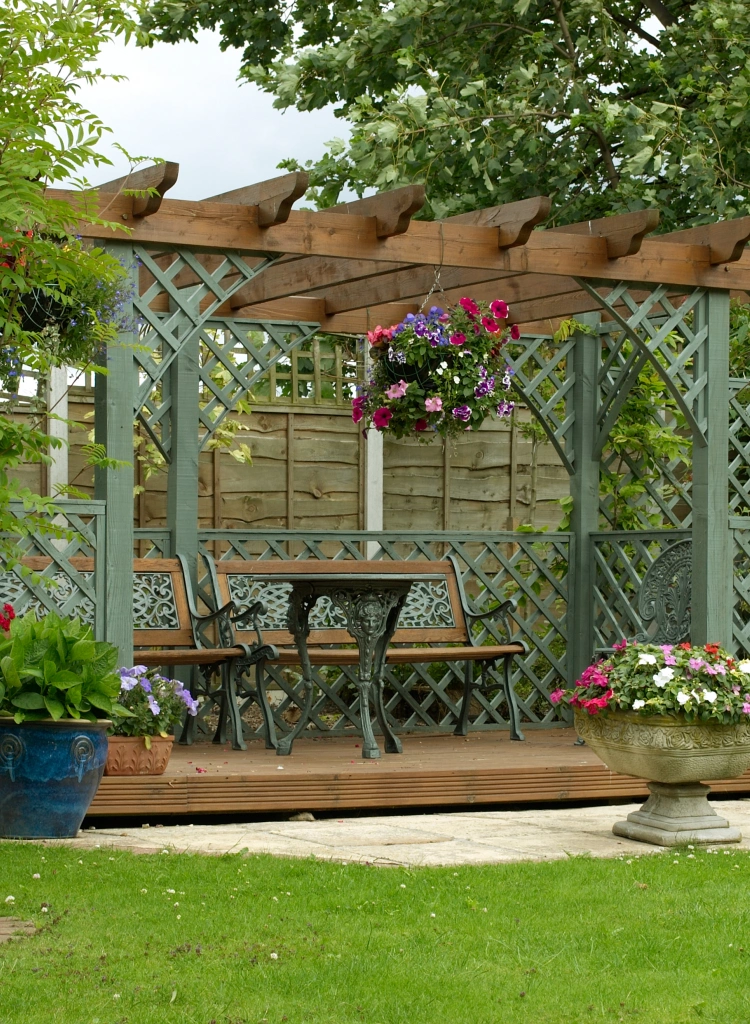
Pergolas bring structure and definition to outdoor spaces, helping gardens feel composed and purposeful without enclosing them completely. They are often used to shape seating areas, mark transitions between different parts of the garden, or introduce vertical interest where planting alone is not enough. At North Hill Gardens, pergola installation is treated as an architectural feature, designed with careful attention to scale, alignment, and how the structure relates to nearby buildings, hard landscaping, and planting.
Pergola Design & Spatial Planning
Pergola design begins with understanding how the garden is used and how people move through it. Orientation affects both comfort and usability, particularly in relation to sunlight and prevailing wind, while proportion determines whether the structure feels balanced within its surroundings. In many gardens, pergolas are positioned to align with doors, paths, or key sightlines, reinforcing a sense of order across the space.
Bespoke pergola design allows dimensions, post spacing, and roof structures to be tailored to the site rather than relying on standard formats. This approach is especially important in Edinburgh and Glasgow, where gardens often vary in size and relationship to neighbouring properties. A well-planned pergola should sit naturally within the landscape, supporting how the space functions rather than drawing attention to itself.
Pergola Materials & Structural Options
Material selection influences both the visual character and longevity of a pergola. Timber remains the most common choice due to its versatility and ability to sit comfortably within planted environments. Different timber species offer varying tones, grain patterns, and durability levels, all of which affect how the structure weathers over time.
For contemporary gardens, pergolas may feature cleaner lines, wider spans, or integrated steel elements to create a lighter visual presence. Fixings, joints, and connection points are carefully detailed to maintain structural integrity while keeping the overall form refined. Material choices are always considered in relation to surrounding hard landscaping, ensuring consistency across the garden.
Practical Uses of Garden Pergolas
Garden pergola installation can support a wide range of uses depending on layout and context. Pergolas are frequently used to define outdoor dining or seating areas, providing partial shade and a sense of enclosure without blocking light. In larger gardens, they may also be used to create thresholds between open lawns and more intimate planted zones.
Pergolas can support climbing plants, helping to soften built elements and introduce seasonal variation. Over time, planting can transform the structure, allowing it to blend further into the landscape while maintaining its underlying form. This balance between structure and growth is often central to successful pergola design.
Construction & Installation Standards for Pergolas
Outdoor pergola installation requires careful groundwork and precise construction to ensure stability and longevity. Post foundations, fixings, and load considerations all affect how the structure performs over time, particularly in exposed locations. Poor installation can lead to movement, misalignment, or premature deterioration.
Working with experienced wooden pergola installers ensures that construction methods are suited to the site and materials used. Structural accuracy is especially important where pergolas connect to paving, retaining walls, or existing buildings, as these junctions need to accommodate movement and weather exposure.
Pergolas Within the Wider Landscape
Pergolas are most effective when designed as part of a broader landscape scheme. Their position often responds to patio layouts, pathways, or changes in level, helping to guide movement and organise space. In some gardens, pergolas form part of a sequence of structures that create rhythm and progression through the landscape.
Across projects in and around Edinburgh and Glasgow, pergola installation often reflects both architectural context and garden scale. Urban gardens may require more restrained detailing, while larger properties allow for more expressive forms. In both cases, integration with the wider landscape remains central to the design approach.
Designing Pergolas as Garden Architecture
Custom garden pergolas benefit from early coordination between design and construction. Addressing proportions, materials, and structural requirements together helps ensure the finished structure feels settled within the garden and performs as intended.
How Do I Get Started With Pergola Installation?
The first step is understanding where a pergola could add structure or function within the garden. Discussing layout ideas, materials, and how the space is used helps clarify the role the structure should play. Getting in touch with our team at North Hill Gardens to arrange an initial conversation allows options for bespoke pergola design and installation to be explored before any decisions are made.