
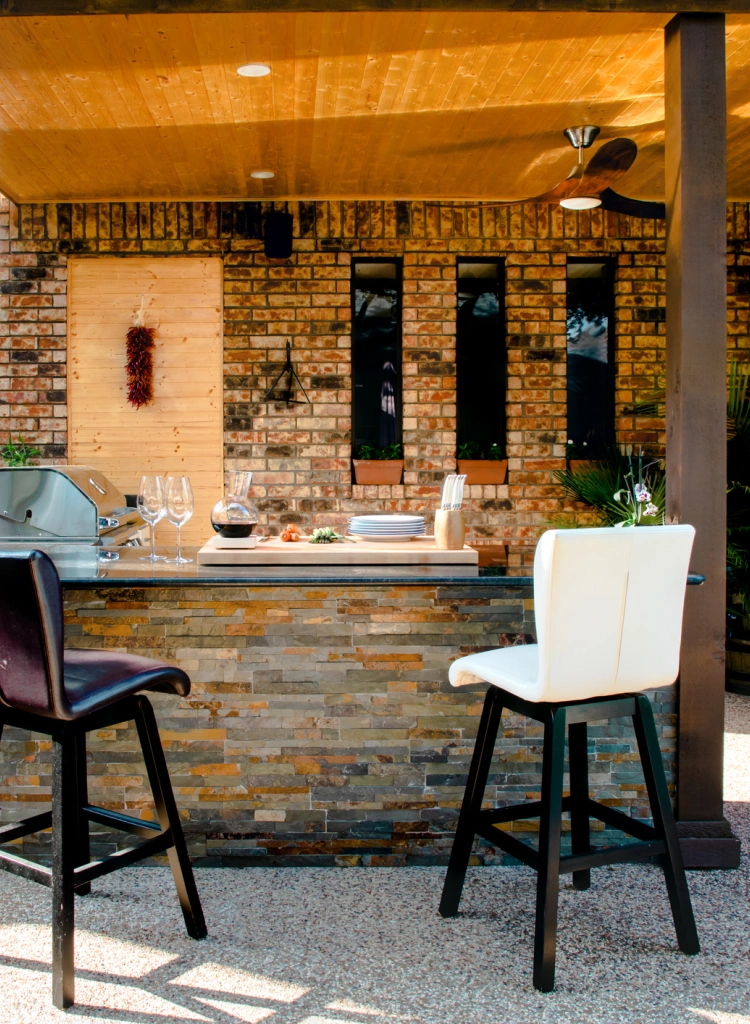
Outdoor kitchens extend the way homes are used, allowing cooking, dining, and socialising to move naturally into the garden. More than a standalone feature, an outdoor kitchen becomes part of the wider landscape, shaping how people gather and interact with the space. At North Hill Gardens, outdoor kitchen installation is approached as a permanent element of the garden, designed to sit comfortably alongside patios, planting, and architectural features rather than feeling temporary or ornamental.
In Edinburgh and Glasgow, outdoor kitchens are increasingly used to create flexible garden spaces that support both everyday use and larger gatherings, particularly where layouts allow for a strong connection between indoor and outdoor areas.
Outdoor Kitchen Design & Layout Planning
Effective outdoor kitchen design begins with layout and flow. Positioning is influenced by proximity to the house, prevailing wind, sunlight, and how the space will be used throughout the day. Clear zones for cooking, preparation, and seating help the area function efficiently without overcrowding the garden.
Bespoke outdoor kitchens allow layouts to be tailored to the site rather than relying on pre-set arrangements. This is particularly important in urban gardens, where space is often limited and sightlines matter. A well-planned garden kitchen installation ensures that work surfaces, appliances, and circulation routes feel intuitive and balanced within the landscape.
Outdoor Kitchen Features & Functional Elements
Outdoor kitchens can include a wide range of features depending on how the space is intended to be used. Built-in grills, preparation counters, sinks, and storage all contribute to a practical setup that supports regular use. Appliances are selected not only for performance but also for durability in outdoor conditions.
Shelter and partial enclosure are often incorporated through pergolas, screens, or overhead structures, helping extend usability across seasons. Lighting also plays a key role, supporting both task-focused activities and ambient evening use. These elements are integrated carefully to avoid visual clutter while maintaining functionality.
Materials & Build Quality for Outdoor Kitchens
Material selection is central to the success of outdoor cooking areas. Worktops, cabinetry, and finishes must withstand exposure to moisture, temperature changes, and frequent use. Stone, concrete, stainless steel, and specialist outdoor-rated materials are commonly used to ensure longevity and ease of maintenance.
Luxury outdoor kitchens benefit from consistent detailing across surfaces and junctions, allowing the installation to feel like part of the original landscape rather than a later addition. Build quality is particularly important where outdoor kitchens connect to patios, retaining walls, or seating structures, as these interfaces need to remain stable and visually coherent over time.
Integration With the Wider Garden
Outdoor kitchen installation works best when planned alongside other garden elements. Patios often form the base for cooking and dining areas, while planting helps soften hard surfaces and define boundaries. In larger gardens, outdoor kitchens may sit within a sequence of spaces, linked by pathways or framed by structures.
In projects across Edinburgh and Glasgow, outdoor kitchens are frequently positioned to take advantage of views, shelter, or evening light. This integration ensures the kitchen supports the overall experience of the garden rather than dominating it.
Construction & Installation Process
Outdoor cooking area installation requires careful coordination between design and build. Groundworks, service connections, and structural elements all need to be addressed early to avoid later disruption. Drainage, ventilation, and access for maintenance are also considered as part of the construction process.
Professional installation ensures that appliances are fitted safely and that materials perform as intended in outdoor conditions. Accurate setting out and sequencing are particularly important when outdoor kitchens form part of a broader landscaping project.
Outdoor Kitchens Across Scotland
Climate and location influence how outdoor kitchens are designed and built. In Scotland, exposure levels, rainfall, and temperature variation all affect material choice and detailing. Projects in more sheltered urban settings may allow for lighter structures, while exposed sites benefit from additional protection and robust construction. Experience working across different regions supports outdoor kitchen solutions that respond appropriately to site conditions while maintaining design integrity.
Outdoor Kitchens as Long-Term Garden Features
Bespoke outdoor kitchens are most successful when treated as long-term investments rather than seasonal additions. Their design, materials, and placement should support regular use and adapt to changing needs over time. When planned carefully, outdoor kitchens become a natural extension of the home and garden.
How Do I Get Started With an Outdoor Kitchen Installation?
The first step is understanding how the garden is used and what role cooking and entertaining should play within it. Discussing layout ideas, features, and practical requirements helps clarify the scope of the project. Getting in touch with North Hill Gardens to arrange an initial conversation allows options for custom garden kitchens and professional installation to be explored before moving forward.