Garden Festival Season: Where the UK’s Biggest Garden Trends Begin
Each year, garden festival season gives us an early view of where British gardens are heading. Events such as the RHS Chelsea Flower Show and the RHS Hampton Court Palace Garden Festival do more than entertain or impress. They set the tone for the latest garden design trends in the UK, from planting palettes and materials to sustainability, layout, and outdoor living.
For homeowners, these festivals offer far more than aspirational images. They show how bold ideas can be scaled, refined, and adapted for real homes. Whether you have a compact courtyard, a family garden, or a larger landscape, the strongest show garden concepts often begin as design statements and end up shaping everyday spaces. This is where UK garden festival trends become useful: they help you see what is current, what has lasting value, and what may work in your own garden.
Why Garden Festivals Matter in British Garden Design
The most influential flower shows are not simply displays of rare plants and polished hard landscaping. They are testing grounds for ideas. Designers use them to explore how people want to live outdoors now, and how gardens must respond to a changing climate, shifting lifestyles, and growing interest in sustainability.
Chelsea Flower Show garden ideas often point to refined design direction. Chelsea tends to lead with strong visual language: sculptural planting, elegant spatial planning, and carefully edited material choices. Hampton Court Palace Flower Show garden ideas often bring a broader sense of lifestyle and practicality, with more direct inspiration for family gardens, productive spaces, and relaxed outdoor living.
Together, these festivals help define RHS garden inspiration for the wider public. They influence what appears in private commissions, new-build developments, public landscapes, and domestic renovation projects across the UK.
The Biggest UK Garden Festival Trends Shaping 2026
1. Sustainable garden trends 2026 are becoming design essentials
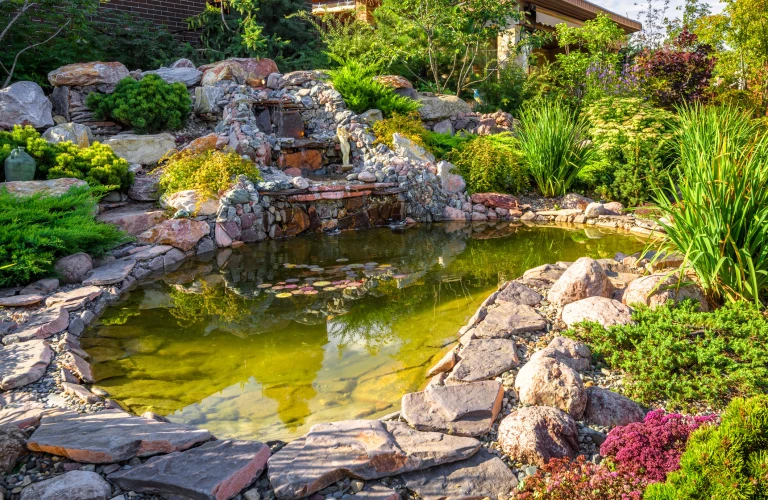
Sustainability is no longer a niche theme or an added extra. It is becoming part of the design brief from the start. At the major festivals, this often appears through drought-tolerant planting, rainwater management, lower-impact materials, habitat creation, and long-term maintenance thinking.
In practice, this means gardens are being designed to work with local conditions rather than against them. Gravel gardens, layered perennial planting, tree canopy for cooling, and more permeable surfaces all support this shift. The visual language is also changing. Sustainable gardens no longer look improvised or purely functional. They can be precise, elegant, and architectural.
2. Planting is becoming looser, deeper, and more climate-aware
One of the most visible modern garden landscaping trends is the move towards naturalistic planting with strong structure. Festival gardens continue to favour layered combinations of perennials, ornamental grasses, shrubs, and small trees that create movement and seasonal change.
This does not mean gardens are becoming messy. The best examples use disciplined design to frame looser planting. Clean lines, repeated materials, and thoughtful zoning allow softer schemes to feel calm and intentional.
For smaller gardens, this trend can be adapted through:
- Repeated planting groups rather than mixed one-offs
- A limited colour palette for a more cohesive effect
- Evergreen structure paired with seasonal planting
- Vertical planting to soften walls and boundaries
3. Outdoor living garden trends in the UK are maturing
Outdoor rooms remain important, but the style is evolving. The focus is shifting from garden-as-showpiece to garden-as-lived-space. The most compelling festival gardens now integrate seating, shade, lighting, storage, and circulation in a more seamless way.
This is one of the most practical areas where show gardens influence domestic projects. Homeowners increasingly want spaces that support different uses across the day and year: morning coffee, family meals, quiet reading, evening entertaining, and children’s play. Good design allows these uses to sit together without the garden feeling crowded.
Current outdoor living garden trends UK homeowners are responding to include:
- Built-in seating and bespoke joinery
- Sheltered dining terraces
- Garden rooms and multi-use zones
- Subtle garden illumination for atmosphere and safety
- Stronger links between house and garden through aligned materials and sightlines
4. Materials are becoming simpler and more tactile
At both Chelsea and Hampton Court, materials often signal where design is going next. There is continued interest in natural stone, gravel, clay tones, timber, weathered metal, and textured surfaces that age well.
This architectural restraint is especially relevant for clients who value design, art, and craftsmanship. Rather than filling a garden with competing features, many of the strongest spaces rely on fewer materials used with confidence. The result is calmer and more timeless.
For a domestic garden, this might mean choosing one paving material and one complementary boundary finish, then allowing planting to provide contrast and softness. Simplicity often creates more impact than variety.
How Chelsea and Hampton Court Influence Everyday Gardens
It is easy to admire a show garden and assume it only works with a large budget, full maintenance team, or generous plot. In reality, the best ideas are often transferable when you break them down into principles.
Chelsea Flower Show garden ideas are often strongest in terms of spatial discipline. They show how to control views, use repetition, and create strong focal points. Even in a small garden, you can apply this by simplifying the plan, reducing clutter, and creating a clear relationship between paths, planting, and seating.
Hampton Court Palace Flower Show garden ideas often feel more open to everyday interpretation. They tend to offer more practical inspiration for mixed-use family gardens, edible elements, wildlife value, and informal entertaining spaces.
Adapting Show Garden Ideas for Small Patios and Courtyards
Small spaces can benefit enormously from festival-led thinking because strong design matters most where space is limited. In compact gardens, every line, finish, and planting decision has more visual weight. A well-resolved small garden might include:
Clear Zoning
Even a modest patio can feel more generous if it has a defined seating area, a planted edge, and one strong focal point. This gives the eye a sense of order.
Vertical Emphasis
Raised planters, trained climbers, pleached forms, or carefully chosen small trees can create depth without sacrificing floor space.
Limited Materials
Too many finishes make a small garden feel fragmented. Restrained palettes are one of the clearest lessons from RHS garden inspiration.
Thoughtful Lighting
Garden illumination can transform a courtyard after dark, highlighting texture, steps, and planting while extending use into the evening.
Bringing Festival Trends Into Larger Family Gardens
Larger gardens allow for more layering, but they also need stronger structure. Without it, space can feel disconnected. Festival gardens show how different zones can relate to one another through geometry, planting rhythm, and repeated materials.
In family gardens, some of the most useful trends include:
- Creating linked destinations rather than one large open area
- Balancing ornamental planting with robust circulation routes
- Using trees and screening to create privacy and shelter
- Incorporating drainage and irrigation planning early
- Designing for longevity, so the garden improves as it matures
Real-World Concerns: Budget, Maintenance, and Whether Trends Will Last
A fair objection to festival-driven design is that trends can feel expensive or temporary. Not every idea seen at Chelsea or Hampton Court deserves a place in a private garden. Some are experimental. Some are highly crafted and difficult to maintain. Some look better for one week than they will for ten years.
What These Trends Mean for North Hill Gardens Clients
For many clients, garden festival season confirms that the best gardens now sit at the intersection of beauty, usability, and environmental intelligence. That aligns closely with how thoughtful residential landscapes are being designed in the UK.
A successful project may begin with comprehensive garden design, or with a more focused route such as a design workshop. From there, planting schemes can bring depth and seasonal character, while sustainability consultancy can help address water use, biodiversity, and resilient material choices. Illumination, irrigation, drainage, and landscaping all play practical roles in turning a strong concept into a garden that performs well every day.
Looking Ahead: From Inspiration to a Garden That Lasts
The strongest latest garden design trends UK homeowners should pay attention to are not passing fashions. They point towards a garden culture that is more sustainable, more considered, and more closely tied to architecture and everyday use. That includes climate-aware planting, elegant outdoor living, restrained materials, and landscapes designed to age well.
If you are planning changes to your own space, start by identifying the ideas that suit your site, your lifestyle, and the character of your home. Then build a scheme that feels grounded rather than copied.
For clients who want to turn RHS garden inspiration into a practical and lasting garden, North Hill Gardens can help shape that process from concept through to planting, landscaping, and the finer technical details. The best festival ideas are not just for the showground. With the right design approach, they can become part of daily life.
Other Posts